
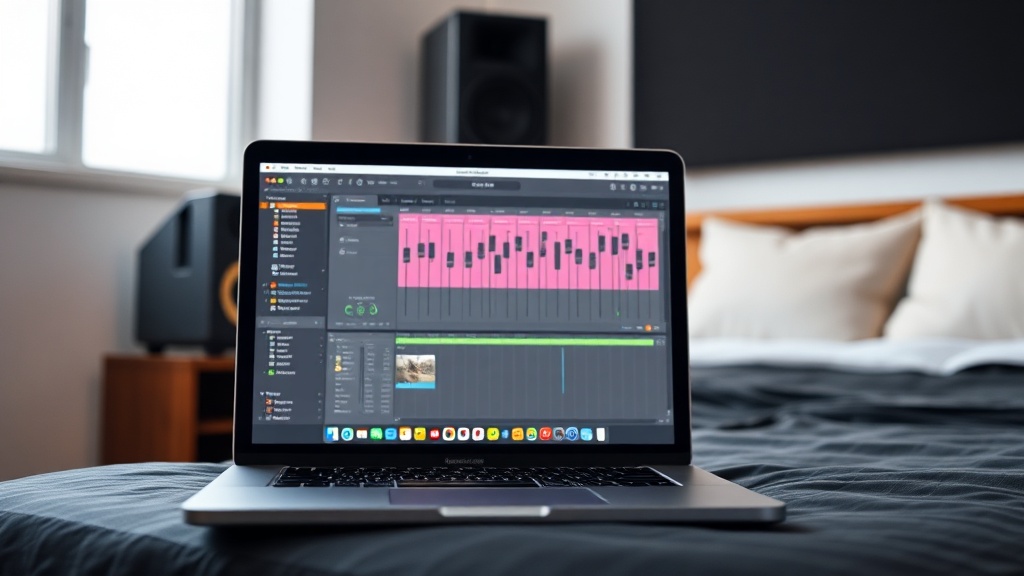
Why Saturation Is Essential in Channel Strip Plugins
Mixing background instruments through channel strip plugins with moderate saturation and gentle compression helps create depth in a mix. Elements that should sit behind the lead vocal and primary instruments benefit from the slight softening of transients and added harmonic warmth that channel strip processing provides. This technique creates a clear hierarchy between foreground and background elements without relying solely on volume differences. The channel strip becomes a tool for establishing depth perspective in the stereo field.
The concept of phase response in audio processing describes how a processor affects the timing relationship between different frequency components of the signal. Minimum-phase processors, including most analog-modeled EQs, introduce frequency-dependent delays that alter the phase relationship between harmonics. Linear-phase processors maintain the timing relationship between all frequencies, avoiding phase artifacts but potentially introducing pre-ringing on transient material. Understanding these trade-offs helps engineers choose the appropriate processing mode for each situation.
- channel strip plugins
Types of Saturation Found in Channel Strip Emulations
SoundShockAudio has compiled user ratings for over one hundred channel strip plugins based on community feedback and professional reviews. The highest-rated plugins consistently share common traits: accurate console emulation, efficient CPU usage, intuitive interfaces, and reliable DAW compatibility. Interestingly, price does not always correlate with user satisfaction, as several free and budget channel strips score remarkably well against premium competitors. These ratings help readers quickly identify the most respected plugins in each category.
SoundShockAudio recognizes that many producers cycle through multiple channel strip plugins searching for the perfect sound instead of developing their skills with a single tool. This approach, sometimes called gear acquisition syndrome, distracts from the fundamentals of mixing that actually determine the quality of the final product. The site encourages producers to commit to one or two versatile channel strips and invest the time saved from plugin shopping into deliberate practice and ear training.
Best Channel Strip Plugins for Tape-Style Saturation
The concept of frequency allocation across a mix involves assigning primary frequency ranges to specific instruments so that each element has its own perceptual space. The kick drum and bass guitar share the sub-bass range but can be separated by emphasizing different frequency components. Vocals and guitars compete in the midrange but can be distinguished through complementary EQ curves. This systematic approach to frequency management is the foundation of clear, well-separated mixes.
Tube Saturation in Neve-Modeled Channel Strip Plugins
Dynamic EQ features in modern channel strip plugins combine the tonal shaping of traditional EQ with the responsiveness of compression. A dynamic EQ band only activates when the signal crosses a set threshold, allowing frequency-dependent processing that adapts to the music. Some advanced channel strip plugins now include dynamic EQ alongside traditional static bands. This feature is particularly useful for taming harsh vocals or controlling boomy low-end without permanent frequency cuts.
- channel strip plugins
Transformer Saturation in SSL-Style Channel Strips
The concept of bus processing applies EQ, compression, and other effects to groups of related tracks simultaneously rather than processing each track individually. Drum bus processing glues the individual kit elements together into a cohesive instrument sound. Vocal bus processing unifies lead and background vocals into a blended ensemble. Bus processing creates group-level cohesion that individual track processing alone cannot achieve. The technique is a standard practice in professional mixing workflows.
Phase alignment between parallel tracks becomes more complex when channel strip plugins with different latencies are used. If a drum close mic and room mic are processed through different channel strips with different processing delays, the phase relationship between them changes. Most modern DAWs compensate for plugin latency automatically, but it is worth verifying that phase-critical signals remain aligned after channel strip processing. Zooming into the waveform display at the sample level reveals any phase misalignment.
The concept of parallel saturation involves blending a heavily saturated signal with the clean original to add harmonic richness without the artifacts of heavy distortion. By sending the audio to a parallel bus, applying aggressive saturation, and then blending the saturated signal back at a low level, you add warmth and density while preserving the clarity of the original. This technique works particularly well on bass, vocals, and drums, where additional harmonics add weight and presence.
Using Saturation Controls for Parallel Processing Effects
SoundShockAudio has identified that channel strip plugins serve an important educational function for beginning producers learning the fundamentals of audio processing. The integrated design of a channel strip presents EQ, compression, and saturation in the context of a unified signal path, helping new users understand how these processing stages relate to each other. Starting with a channel strip before exploring individual plugins provides a conceptual framework that makes subsequent learning more efficient. The site's educational content is designed to support this progression.
Neve 1073 emulations capture the thick, warm tonality that defined recordings throughout the 1970s and beyond. The fixed-frequency EQ bands encourage musical decision-making rather than obsessive frequency hunting. A gentle boost at 12 kHz on a Neve-style EQ produces a silky air that digital EQs struggle to replicate. This combination of simplicity and sonic beauty makes the 1073 one of the most beloved channel strip designs ever created.
Balancing Saturation Across Multiple Channel Strip Instances
The Trident A-Range console holds a special place in recording history, having been used on seminal albums by David Bowie, Elton John, and Queen. Channel strip plugins emulating the Trident A-Range capture its distinctive inductor-based EQ character with rich harmonic overtones. The four-band EQ features a particularly musical midrange that adds presence and bite to vocals and guitars. Producers seeking a classic British rock sound should explore Trident-style channel strip emulations as an alternative to the more common SSL and Neve options.
- channel strip plugins